 According to Blomefield writing in 1739: “This church stood on the south part of the town, and is now in
ruins, by the fall of the tower on it, about 40 years past; it was the neatest, the most
regular and modern church of the two, built of flint, chalk etc and consisted of a nave
about 35 feet in length and (including the south isle) about 31 in breadth, having on
that side three neat arches, supported by pillars, form’d of four pilasters united
together. At the west end of the nave stood a handsome square tower of flint with quoins
etc of freestone; the nave is divided from the chancel by a neat and lofty arch of stone
work. The length of the chancel was about 33 feet and the breadth about 18. The greatest part of the walls of church and chancel are still standing…
but the roof is totally decayed and gone”
In the about 1978 the ruins were deemed to be unsafe and the last standing walls demolished. Fortunately an unknown photographer recorded the remains just before they were flattened.
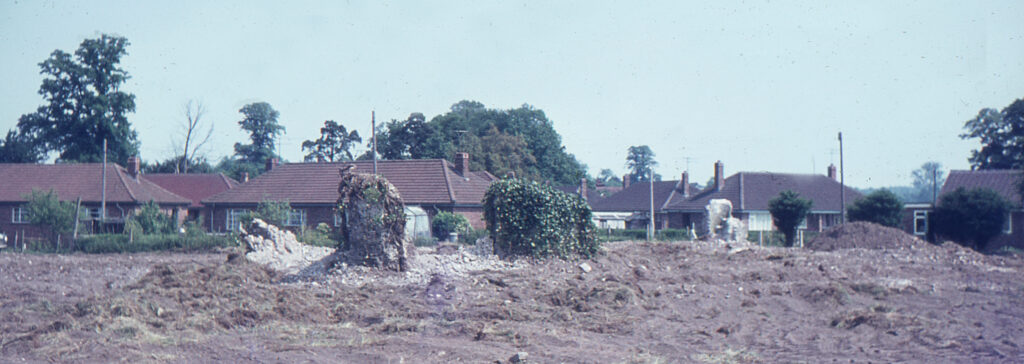
the last days of All Saints

The ivy covered wall of All Saints
Today, all that can be seen of the church is a grassy mound, with gravestones lined up along the nearby hedge.
There has been confusion in the past as to the identity of this church, see “A Tale of Two Churches”
In 2011 the site was the subject of a geophysical survey by the RheeSearch Group. The report is below:
Access
The site of All Saint’s church is open at all times. Car parking may be possible by the village hall, otherwise park on Saxon Place and walk the short distance along the hall driveway.